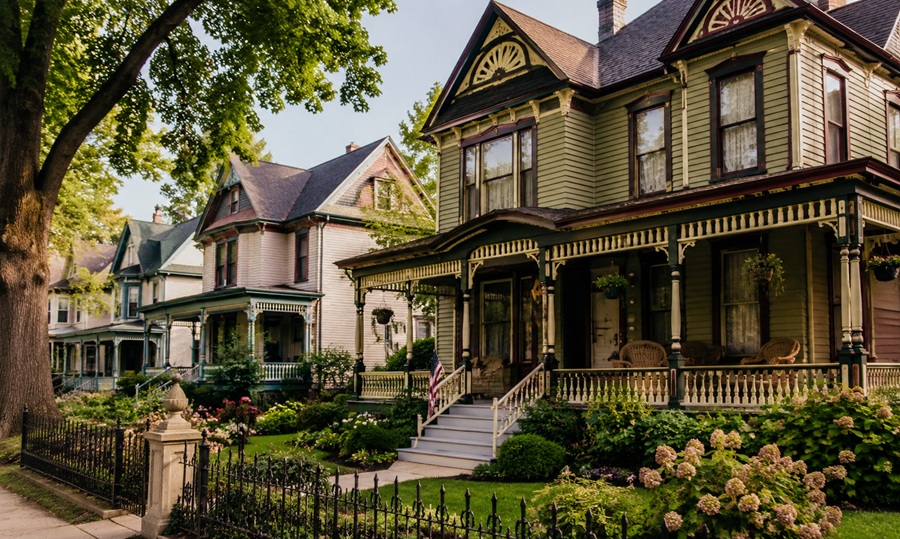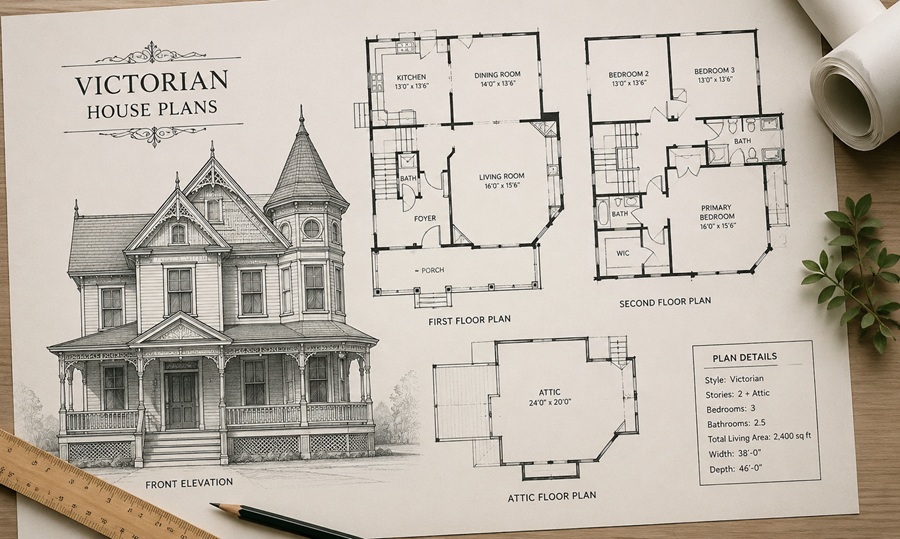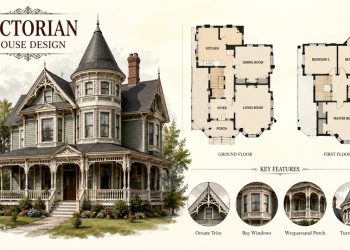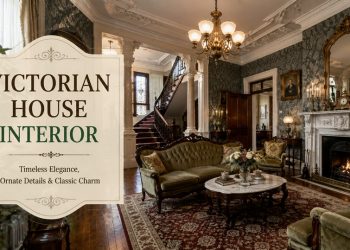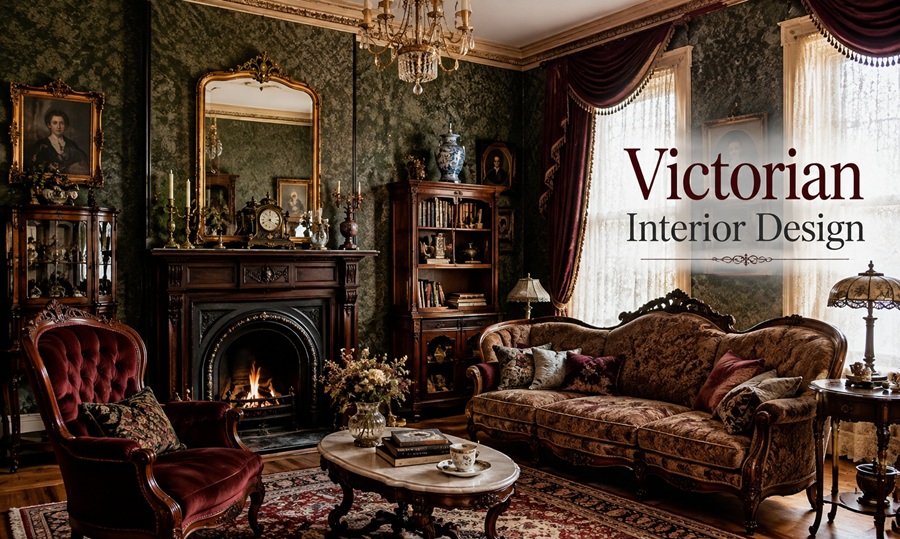
There’s a reason people still stop mid-scroll when they see a deep emerald parlor stuffed with velvet, brass, and botanical prints. Victorian interior design wasn’t trying to be subtle — it was trying to prove something. Wealth, taste, global reach, all crammed into a single sitting room. More than a century later, designers keep circling back to it, and homeowners keep asking the same question: how do you actually pull this off without your living room looking like a museum exhibit?
Quick Answer: Victorian interior design (1837–1901) is characterized by rich jewel-toned walls, ornate woodwork, layered patterns, heavy drapery, dark wood furniture, and an abundance of collected objects. It draws from Gothic Revival, Rococo Revival, and Renaissance Revival influences, favoring opulence and craftsmanship over minimalism.
A Style Born From Ambition
Queen Victoria’s reign coincided with the Industrial Revolution, and that timing matters more than most people realize. Factories suddenly made carved furniture, patterned wallpaper, and imported fabric affordable to the growing middle class — not just aristocrats. So interiors became a way to signal arrival. If you could afford it, you filled the room with it.
Core Elements You’ll Find in Every Victorian Room
- Deep, saturated wall colors — burgundy, forest green, navy, mustard
- Elaborate crown molding, medallions, and wainscoting
- Layered textiles: velvet drapes, lace underlays, fringed upholstery
- Dark hardwoods — mahogany, walnut, rosewood
- Patterned wallpaper, often floral or damask
- Oriental rugs layered over hardwood floors
- Gas-lamp-style lighting fixtures, later electrified
- Curio cabinets filled with collected objects
Color Palette at a Glance
| Room | Signature Colors | Common Accents |
| Parlor | Emerald, burgundy | Gold trim, brass |
| Dining Room | Deep red, chocolate brown | Silver, dark wood |
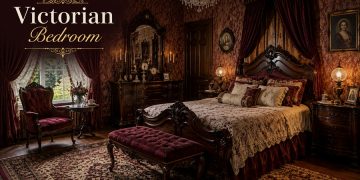
| Bedroom | Dusty rose, plum | Lace, ivory |
| Study | Hunter green, navy | Leather, brass |
Room-by-Room Breakdown
The Parlor
This was the performance stage of the house — where guests were received and status was displayed. Expect tufted furniture, a fireplace mantel loaded with framed photographs, and heavy curtains that blocked out both light and street noise.
The Dining Room
Formality ruled here. A long table, a sideboard for serving china, and often a chandelier or gasolier overhead. Wallpaper below the chair rail tended to be darker to hide scuffs.
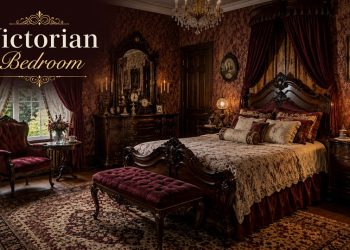
The Bedroom
Softer palettes, but no less ornamented. Four-poster beds, embroidered linens, and a dressing table were standard.
Bringing the Look Into a Modern Home
You don’t need to replicate a Victorian house wholesale to borrow from it. A few strategic moves go a long way:
- Pick one wall for a saturated, moody color instead of painting the whole room
- Introduce pattern through wallpaper or an area rug rather than every surface
- Mix in one or two genuinely antique or vintage pieces — a mirror, a side table
- Layer lighting: overhead, table lamps, and a floor lamp instead of one bright source
- Add brass or dark bronze hardware to existing furniture for an instant period nod
Design Tip: Victorian rooms feel authentic when they look collected over decades, not decorated in a single weekend. Buy pieces slowly.
Mistakes to Avoid
People often overcorrect in one of two directions — either they go full costume-drama with every surface patterned, or they get scared and reduce the whole style to a single dark accent wall. Neither captures what made these rooms work. The original spaces balanced density with intention: every object had a place, even if there were a lot of objects.
Materials That Made the Era
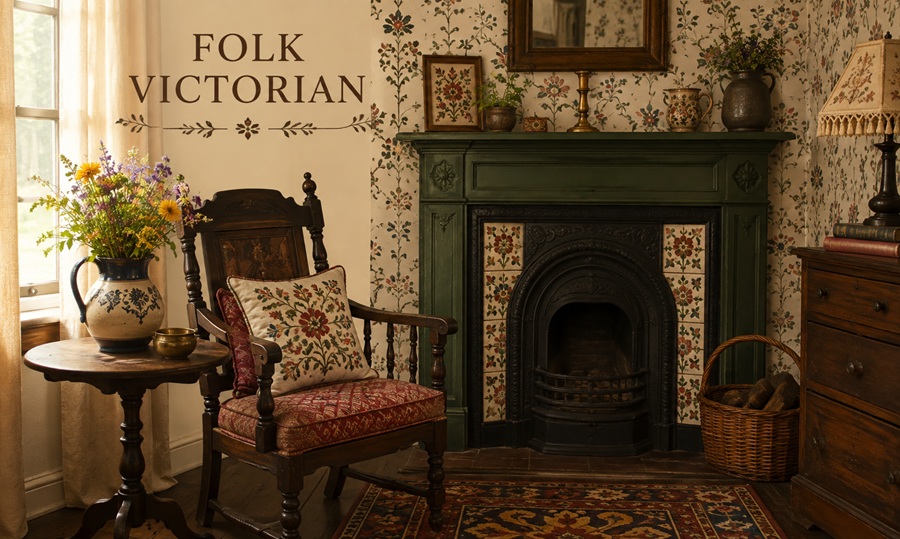
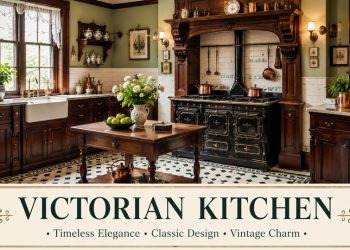
Victorian craftsmen had access to a wider range of manufactured materials than any generation before them, and interiors show it. Cast iron fireplace surrounds replaced simpler wood mantels in many middle-class homes. Encaustic tile — patterned all the way through, not just glazed on top — became a hallway staple because it could survive decades of foot traffic without fading. Stained and etched glass showed up not just in windows but in interior doors and room dividers, letting light pass between rooms while still preserving privacy. None of these were purely decorative choices; they solved practical problems of the era, from muddy boots to gas-lamp soot, in a way that also happened to look impressive.
How Lighting Actually Worked Then vs. Now
It’s easy to forget that most Victorian interiors were designed around gas lighting, not electricity, for the majority of the era. That single fact explains a lot about the color choices — deep, saturated wall colors hid soot stains far better than pale ones. When recreating the look today, it helps to mimic that same layered, low, warm lighting rather than relying on a single bright overhead fixture, which reads as distinctly modern and undercuts the mood.
Frequently Asked Questions
Is Victorian design too dark for small rooms?
Not necessarily. Saturated colors can actually make a small room feel intentional rather than cramped, especially with good layered lighting.
What’s the difference between Victorian and Gothic Revival?
Gothic Revival is one sub-style within the broader Victorian era, marked by pointed arches and church-like details. Victorian design as a whole is broader and includes Rococo and Renaissance Revival influences too.
Can Victorian style work with modern furniture?
Yes — many designers mix a Victorian-era antique with clean-lined contemporary pieces to avoid a costume-like effect.
What wallpaper is most authentic to the era?
William Morris-style botanical prints and damask patterns are among the most historically accurate choices still widely available today.
Do I need real antiques to get the look?
No. Reproduction furniture and vintage-inspired fabrics can achieve the same visual effect for a fraction of the cost.
What lighting fits best?
Fixtures that mimic gas lamps — brass finishes, glass globes, warm bulb tones — read as period-appropriate without needing actual antiques.
Final Thought
Victorian interior design rewards patience and restraint used in the right places. Start with one saturated room, add texture before you add more color, and let the collection grow over time. That’s how the style earned its reputation in the first place — not through a single purchase, but through accumulated character.