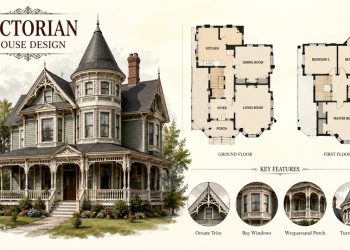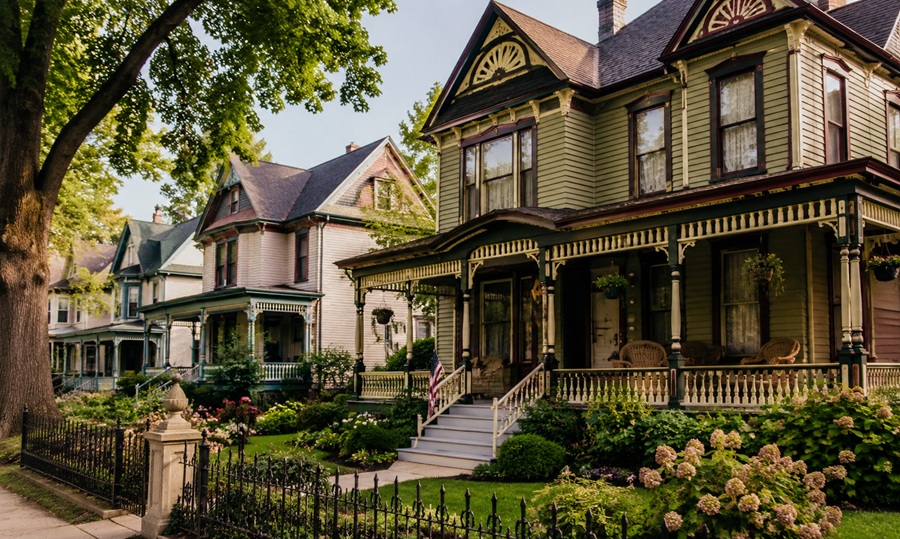
What actually makes a house “vintage” instead of just old? It’s a fair question, since the term gets used loosely — sometimes for a 1920s bungalow, sometimes for a 1970s ranch. There’s no single legal definition, but most real estate professionals and preservationists use “vintage” for homes roughly 50 to 100+ years old that still carry the architectural character of their original era.
Signs You’re Looking at a Genuine Vintage Home
- Original hardwood floors, often narrower plank widths than modern flooring
- Plaster walls instead of drywall
- Higher ceilings than typical modern construction
- Original window trim and moldings with hand-finished details
- A basement or foundation style consistent with the claimed era
- Door hardware — glass or brass knobs, skeleton key locks
Vintage Houses by Era
| Era | Common Style | Defining Trait |
| 1900s–1920s | Craftsman, Victorian holdovers | Built-in cabinetry, deep porches |
| 1920s–1940s | Tudor Revival, Bungalow | Steep roofs, arched doorways |
| 1940s–1960s | Mid-Century Ranch | Open sightlines, large windows |
| 1960s–1970s | Split-level, Colonial Revival | Multi-level floor plans |
Buying vs. Renovating: What Actually Differs
Buying a vintage house that’s already been thoughtfully updated skips the renovation timeline entirely, but you’ll pay a premium for that convenience. Buying one that needs full restoration costs less up front but almost always runs over budget once walls come open and unexpected issues — outdated wiring, hidden water damage, foundation settling — surface.
- Buy updated if: you want to move in immediately and have limited renovation tolerance
- Buy as-is if: you have cash reserves for surprises and want control over every finish
- Walk away if: the inspection reveals structural or foundation issues beyond your budget
Pre-Purchase Checklist
- Full inspection including sewer line scope
- Lead paint and asbestos testing, especially pre-1978 construction
- Electrical panel and wiring age check
- Roof age and condition
- Foundation and drainage assessment
- Confirmation of any historic district restrictions on exterior changes
Tip: Ask specifically about knob-and-tube wiring and galvanized plumbing — both are common in vintage homes and both are expensive to replace.
Financing Quirks Specific to Older Homes
Not every mortgage product works cleanly with a vintage house that needs work. Conventional loans sometimes require repairs to be completed before closing if an appraiser flags safety issues like exposed wiring or a failing roof, which can create a chicken-and-egg problem for buyers who need the loan to fund those very repairs. Renovation-specific loan products exist precisely for this situation, rolling estimated repair costs into the total loan amount, though they typically come with more paperwork and a slower closing timeline than a standard mortgage.
What a Good Inspector Should Flag Specifically
A generic home inspection isn’t always enough for a vintage property. It helps to ask directly whether the inspector has experience with older construction methods, since issues like balloon framing, plaster keying, or galvanized supply lines don’t always get the same scrutiny from an inspector used to newer builds. A specialist inspection focused on the home’s actual era tends to catch problems a general inspection glosses over.
FAQs
Is buying a vintage house a good investment?
It depends heavily on location and condition. Vintage homes in desirable, walkable neighborhoods often hold value well, but renovation costs can erode that advantage if not carefully budgeted.
What’s the biggest hidden cost in vintage homes?
Electrical and plumbing systems. What looks like a cosmetic renovation often uncovers infrastructure that needs full replacement.
Can I get homeowner’s insurance on an older house?
Yes, though insurers may require updated wiring, plumbing, and roofing before issuing a policy, or may charge higher premiums otherwise.
How do I know what era my house is from if records are missing?
Building permits, tax assessor records, and even nail types found during renovation can help date a home when paperwork is incomplete.
Are vintage houses harder to finance?
Sometimes — lenders may require additional inspections or repairs before closing, particularly if major systems appear outdated.
Vintage houses reward buyers who go in with clear eyes and a real budget for surprises. The character is genuine, but so is the maintenance — go into it informed, not just charmed.