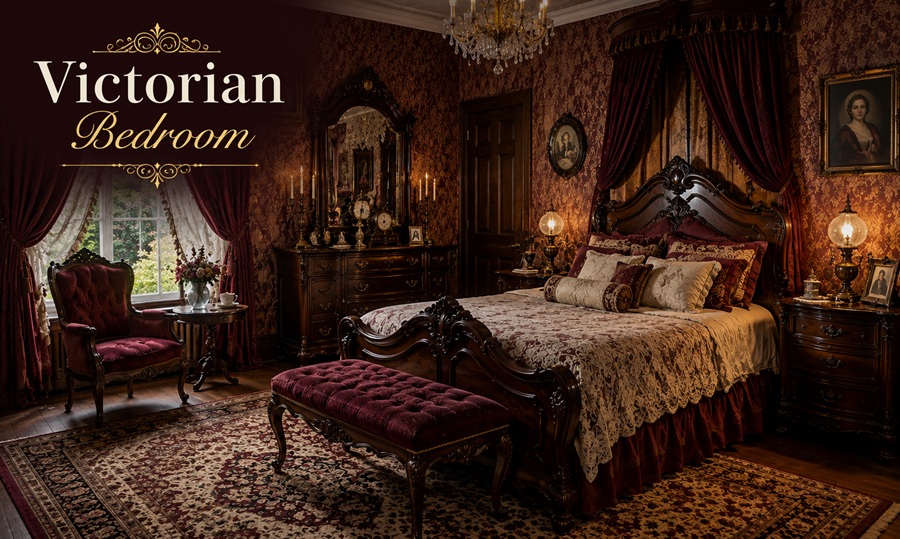
Unlike the formal parlors and dining rooms downstairs, a Victorian bedroom was meant to feel personal, softer, and a little indulgent. That distinction still holds up as design inspiration well over a century later. The style leans into romance and texture without losing comfort, which is exactly why it’s remained a popular reference point for bedrooms even in homes that have nothing else Victorian about them.
What Defines a Victorian Bedroom?
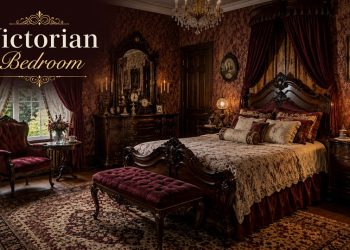
Victorian bedrooms, from the era spanning roughly 1837 to 1901, were typically less ornate than parlors or dining rooms but still carried the period’s love of pattern and texture. The overall feel leaned toward softness, with florals, lace, and light fabrics balancing out darker wood furniture. A statement bed, layered textiles, antique-style furniture with curved lines, and warm, soft lighting all show up across most Victorian-inspired bedrooms, along with a dedicated seating spot such as a chaise or slipper chair.
How Do You Choose a Victorian-Style Bed?
The bed is the focal point of a Victorian bedroom, and the style typically calls for something with presence. Wrought iron beds with scrollwork, or wood four-poster and sleigh beds in dark finishes like mahogany or walnut, both fit the period. A tufted or upholstered headboard in velvet is a reasonable alternative if an antique-style frame isn’t available. Canopy beds are another historically grounded option, particularly for a primary bedroom meant to feel like a genuine showpiece, though they work best in rooms with enough ceiling height to avoid feeling cramped.
How Do You Layer a Victorian Bed in Four Steps?
Getting the layered look right on the bed itself matters more than almost any other single element in the room.
- Start with a smooth base layer, such as a cotton or linen fitted sheet in a soft, neutral tone.
- Add a quilted coverlet or duvet, ideally in a muted color like rose, sage, or cream.
- Layer in a lace-edged throw or coverlet across the foot of the bed for texture.
- Finish with decorative pillows in varying fabrics, mixing velvet, lace, and embroidered details rather than matching everything exactly.
What Wallpaper and Wall Treatments Fit a Victorian Bedroom?
Floral wallpaper is one of the fastest ways to signal a Victorian bedroom, particularly in patterns with climbing vines, roses, or damask motifs. If full-room wallpaper feels like too much, a single accent wall behind the headboard offers the same effect with less commitment. Wainscoting or picture-rail molding paired with a solid wall color above is another period-accurate option, and it pairs especially well with a busier wallpaper pattern above it.
What Color Palette Fits a Victorian Bedroom?
Victorian bedrooms often used softer, more muted tones than the deep jewel colors found in formal rooms. Dusty rose, soft lavender, sage green, and cream were all common. Deeper colors like burgundy or navy can still work, especially as accent tones against lighter walls, and pairing a muted wall color with darker wood furniture tends to strike the right balance between romantic and heavy.
What Furniture and Lighting Complete a Victorian Bedroom?
A proper Victorian bedroom typically included a wardrobe, since built-in closets weren’t standard at the time, along with a dressing table or vanity with an oval mirror. A small tufted bench or slipper chair near the window is a common finishing touch, and a nightstand with turned legs or carved detailing helps carry the look through to the smaller furniture pieces.
For lighting, warm, ambient sources fit the room far better than bright, cool-toned fixtures. Table lamps with fringed or fabric shades, wall sconces, and even a small chandelier can all work, provided the bulbs lean warm rather than stark white. Placing a lamp on each side of the bed, rather than relying on a single overhead fixture, also mirrors how these rooms were actually lit before modern electric lighting became standard.
How Do You Add Victorian Detail to a Small Bedroom?
Smaller bedrooms can still carry Victorian character without feeling overloaded. Concentrating pattern and color on one accent wall, choosing a single statement piece like an iron bed frame, and keeping the remaining furniture simpler are all effective ways to scale the style down. Mirrors, which were common in Victorian bedrooms both for function and to reflect candlelight or lamplight, can also help a smaller room feel less cramped while still fitting the period aesthetic.
What Accessories and Decor Complete the Look?
- Framed botanical prints or portrait-style artwork
- A vintage or vintage-style mirror with an ornate frame
- Glass or crystal perfume bottles on the dressing table
- Fresh or dried flowers in a period-appropriate vase
- A decorative jewelry box or trinket dish on the nightstand
What Mistakes Should You Avoid in a Victorian Bedroom?
A few recurring missteps tend to undercut the style even when the bigger pieces are right: choosing a bed frame that’s too plain or modern, using only one pattern instead of layering florals with stripes or solids, picking overly bright, cool-toned lighting instead of warm, ambient sources, skipping window treatments entirely, and filling the room with dark colors and heavy furniture without any lighter, softening elements to balance it out.
How Do You Make a Victorian Bedroom Livable?
A fully authentic Victorian bedroom can feel heavy if every element is maximized at once. Many homeowners today soften the look by keeping the walls or larger furniture pieces simpler and concentrating the Victorian detail in textiles, a statement headboard, and lighting. A well-chosen headboard, a pair of bedside lamps, and a few layered textiles often do more visual work than an entire room full of antique furniture, and they’re far easier to update later if your taste changes.
What Do Homeowners Usually Ask About Victorian Bedrooms?
A few practical questions come up again and again when people start planning this kind of room.
Does a Victorian bedroom need a canopy bed?
No. A canopy bed is a nice option if the ceiling height allows for it, but an iron bed frame, a carved wood frame, or an upholstered headboard can all achieve the same focal-point effect without one.
Can a Victorian bedroom work with a modern bed frame?
Yes, especially if the frame has an upholstered or tufted headboard in velvet. The overall layering of textiles and the lighting choices tend to matter more to the look than the frame itself being a genuine antique.
How much wallpaper is too much?
There’s no fixed rule, but many homeowners find that one accent wall provides enough pattern without making the room feel overwhelming, particularly in smaller bedrooms.