Ask a District EV owner how they keep the battery full and the answer rarely starts with the car. It starts with the parking. A garage in Chevy Chase, an alley pad in Bloomingdale, a curb space in Columbia Heights and a numbered condo spot all lead to different setups, rules and bills.
Homeowners pricing a Washington electric vehicle charging station of their own, the type of install handled at paradise-construction-dmv.com along with panel upgrades and rewiring, tend to discover the same thing. The charger itself is the easy decision. Where the car sleeps at night shapes nearly everything else, so it makes sense to sort the options that way.
A Garage or Driveway Makes Life Simple
Detached homes in upper Northwest, Silver Spring or Arlington have the easiest path, and a Level 2 charger on a dedicated 240 volt circuit is the obvious target.
Level 1 charging, using the cord that comes with the car and an ordinary 120 volt outlet, adds only a few miles of range per hour. That works for short commutes but struggles with a long weekend drive. A Level 2 unit on a 40 or 50 amp circuit can add roughly 25 to 35 miles per hour, which refills most cars overnight.
A few details separate a solid install from a sloppy one. EV charging counts as a continuous load, so the circuit has to be sized at 125 percent of what the charger draws. Many electricians now prefer hardwiring the charger instead of using a plug in outlet, partly because newer code editions require ground fault protection on 240 volt garage and outdoor receptacles and cheap outlets have a habit of overheating under hours of steady current. A permit and inspection are part of the job in the District and in every surrounding county.
The bigger question is usually the panel. A survey by the Electrical Safety Foundation found that more than half of the homeowners who added home charging needed a panel upgrade first, and the group’s EV charging survey results make a strong case for having an electrician assess an older home before buying any equipment. When the panel is close to full, a load management device that slows the charger while the dryer or range is running can sometimes avoid a bigger service upgrade.
The Alley Pad Behind a Rowhouse
Thousands of DC rowhouses have a parking pad or small garage off the rear alley. That space is private, so Level 2 charging is allowed, but getting power there takes more planning than a suburban garage.
The panel is often in the basement at the front or middle of the house. Reaching the back means running wire through finished ceilings or along a basement wall, then out through brick and across a narrow yard, sometimes in a trench with buried conduit. The charger itself needs an outdoor rated enclosure, a mounting spot where it will not be clipped by a turning car and a cable that can reach the port without stretching across the alley. A lockable or app controlled unit keeps neighbors from borrowing power.
Street Parking Changes Every Rule
This is where most of the confusion lives. Curbs and sidewalks in the District are public space, so a homeowner cannot install a private Level 2 charger at the curb. The District Department of Transportation does allow residents to charge a street parked car with a cord crossing the sidewalk, but only under its guidance.
- Level 1 charging only, with no 240 volt Level 2 across public space
- The cord must cross the sidewalk at a right angle, which means parking almost directly in front of the house
- A ramp style cover has to protect the cord across the full width of the sidewalk so wheelchairs and strollers can pass
- The space cannot be reserved with signs or cones, and normal parking rules still apply
- All equipment has to be put away when the car is not charging
Following those conditions means no public space permit is needed. In practice, many owners improvise with long orange extension cords, which is exactly what safety groups warn against. A better setup has an electrician add a weather resistant, GFCI protected outlet on the front of the house as close to the sidewalk as possible, so the car’s own manufacturer cord can reach without an extension.
The picture is a little different over the line in Maryland, where Montgomery County has allowed residents to pay for curbside charging, and rules vary by county in both Maryland and Virginia.
Condo and Co-op Garages Now Have Rights Attached
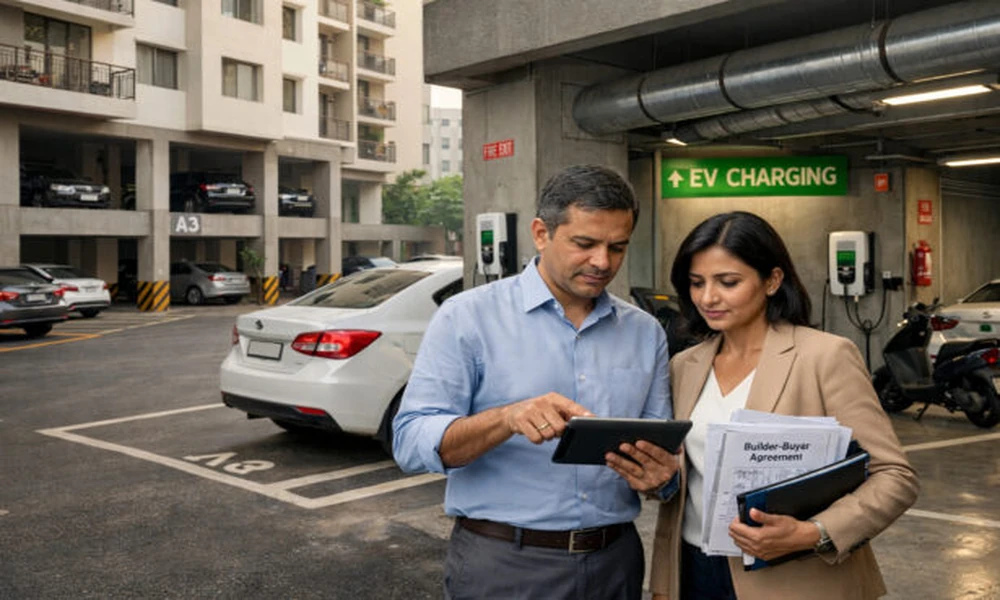
For years, condo owners in DC needed a board’s blessing that sometimes never came. That changed with the Comprehensive Electric Vehicle Infrastructure Access, Readiness, and Sustainability Amendment Act of 2024, which took effect in early 2025 and gives condo and community association owners a right to install charging with reasonable conditions.
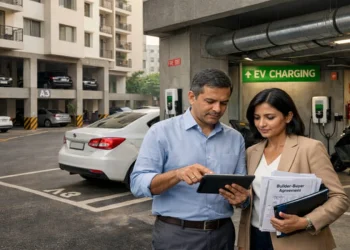
Those conditions matter when budgeting. An association can ask owners to register the charger, use a licensed electrician who knows EV equipment, cover maintenance and any damage to common areas, pay for removal and restoration later and connect the charger to their own utility account whenever the installer finds that possible. The practical challenge is distance. A deeded space may sit 200 feet from the owner’s meter, which turns a simple install into a long conduit run through a shared garage.
Renters gained a similar right to install charging at their residence, with landlords allowed to set reasonable safety requirements. New and substantially renovated residential buildings have also been required since 2021 to make a share of their parking ready for future chargers, so newer garages often have conduit waiting.
The Public Plug at the End of the Block
For drivers with no private option at all, the District is testing a different answer. Earlier this year DDOT and the Department of Energy and Environment launched a neighborhood curbside pilot with a charging company called It’s Electric, placing 16 Level 2 chargers at eight sites, one in each ward. The first location opened on Mozart Place NW in Adams Morgan. The chargers have no attached cables, so drivers bring their own, and the data collected will shape permanent rules for private curbside charging.
Sixteen chargers will not cover a city of street parkers, but the pilot signals where policy is heading.
Matching the Setup to the Spot
The common thread across all of these situations is that the cheapest, most reliable charging is almost always the kind closest to where the car already spends the night. A garage owner can go straight to Level 2 and focus on panel capacity. An alley pad owner should expect most of the cost to be in the wire run. A street parker in the District is limited to a careful Level 1 setup for now, while condo owners finally have the legal footing to push a project forward. An honest look at where you park, and how far that spot sits from your panel, says more than any spec sheet.