Not every backyard needs a full redesign. Sometimes the yard just needs a few smart, low-effort changes to go from forgettable to functional. Here are ten that consistently deliver the most visible improvement for the least amount of work.
1. Define the Edges First
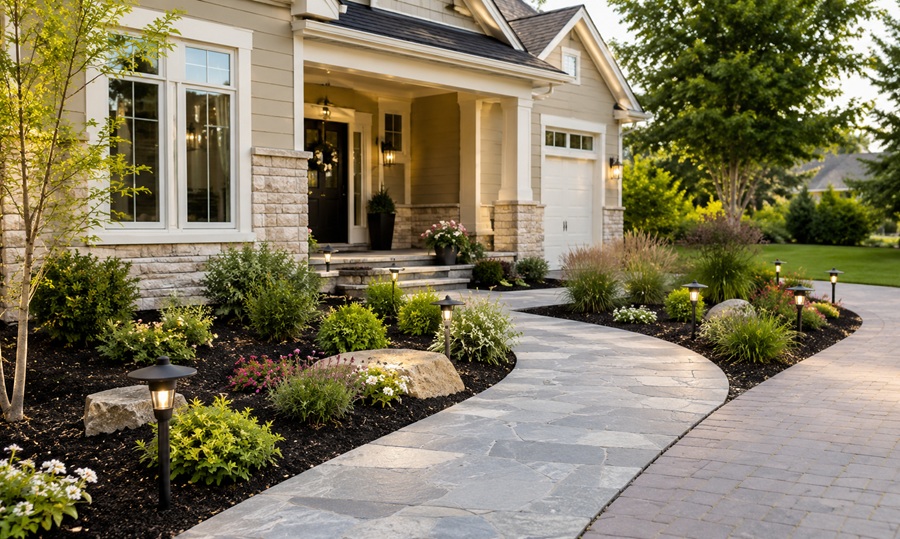
Before adding anything new, clean up the borders between lawn, beds, and hardscape. A crisp edge alone makes an entire yard read as intentional rather than neglected.
2. Add a Gravel or Mulch Path
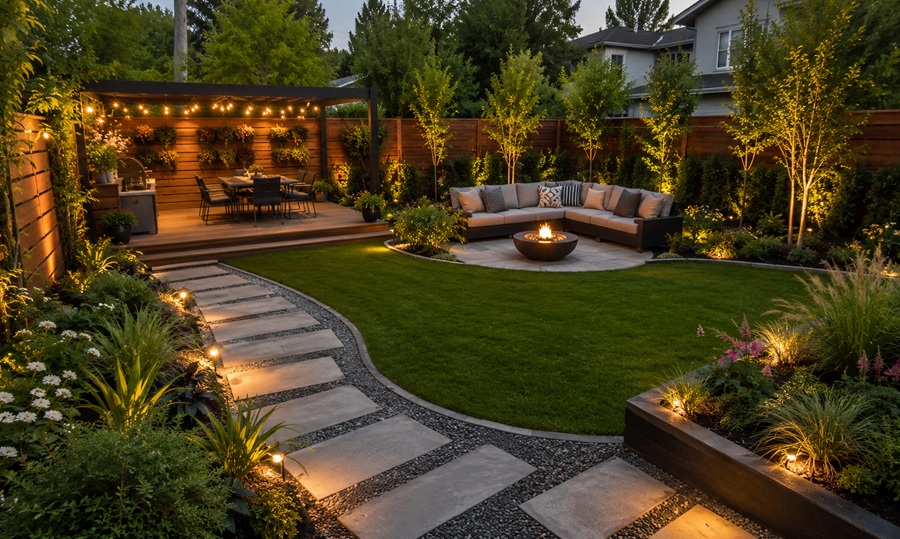
A simple path — even just stepping stones through mulch — gives the eye a route to follow and immediately organizes the space.
3. Group Plants in Odd Numbers
Plant in clusters of three or five instead of scattering single plants. It reads as designed rather than random, and it’s not more expensive.
4. Choose Native, Low-Maintenance Plants
Native species need less water, less fertilizer, and less babying overall, which matters most in the first two years after planting.
5. Install a Simple Raised Bed
One raised bed near the kitchen door adds function (herbs, vegetables) without committing to a full garden overhaul.
6. Add String Lights or Solar Path Lights
Cheap, fast, and it extends usable hours in the yard well past sunset.
7. Create One Defined Seating Area
Even a small gravel patch with two chairs gives the yard a destination instead of just open lawn.
8. Use Containers for Instant Color
Large pots near the patio door add seasonal color without any digging — swap them out as the seasons change.
9. Plant a Privacy Screen With Shrubs
A row of evergreen shrubs along a fence line is cheaper than fencing and softer visually than a solid wall.
10. Mulch Everything You Can
Fresh mulch on beds instantly makes a yard look maintained, and it suppresses weeds at the same time — arguably the highest return-on-effort item on this list.
Budget tip: tackle edging and mulch first. Both cost relatively little and change the overall impression of the yard more than almost anything else on this list.
Timing These Projects Right
Most of these ten ideas are far easier to execute at certain times of year than others. Edging and mulching work best done in spring before weeds establish, or in fall as a cleanup step before winter. Planting is generally most forgiving in early spring or early fall, when new roots aren’t fighting summer heat stress. String lights and containers, on the other hand, can go in any time — they’re not dependent on a planting season, which makes them a good starting project if you’re eager to see results immediately rather than waiting for a seasonal window.
A Few Honest Trade-offs
Going the low-maintenance route does mean giving up some flexibility — native plants, for instance, might not bloom as long or as showily as high-maintenance ornamentals. That’s usually a fair trade for anyone who doesn’t want a demanding weekend hobby out of their backyard.
FAQ
Q: What’s the cheapest way to improve a backyard fast?
A: Edging the lawn and adding fresh mulch to existing beds — both cost relatively little and make an immediate visual difference.
Q: Do I need an irrigation system for low-maintenance landscaping?
A: Not necessarily, especially with native or drought-tolerant plants, though a simple soaker hose helps during establishment.
Q: How do I landscape on a tight budget?
A: Focus on a few high-impact areas — one seating spot, one planted bed, clean edges — rather than trying to redo the whole yard at once.
Q: What plants require the least maintenance?
A: Native perennials and ornamental grasses typically need the least ongoing care once established.
Q: Is mulch or gravel better for pathways?
A: Mulch is cheaper and softer underfoot; gravel drains better and lasts longer without needing to be replenished.
Simple backyard landscaping isn’t about doing less — it’s about being deliberate with the few things you do. Pick two or three ideas from this list, finish them completely, and the yard will already look transformed.