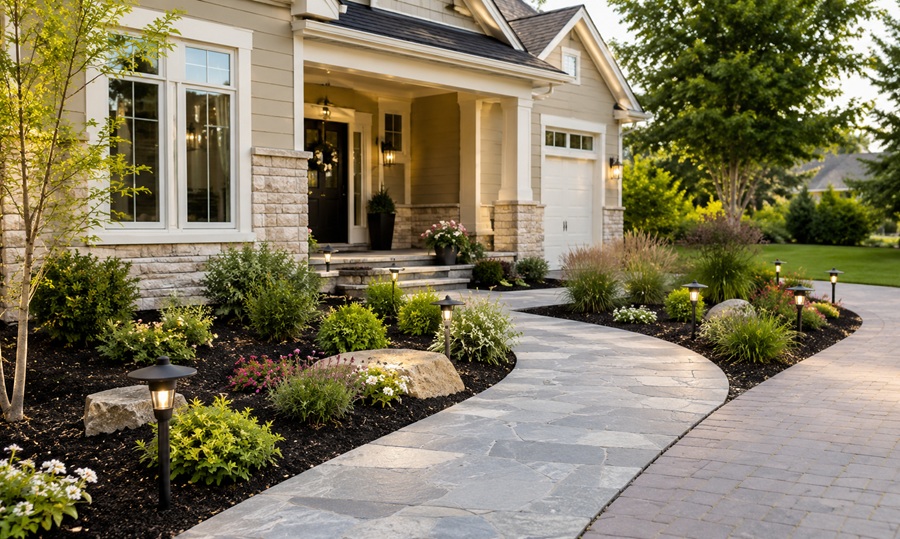
Curb appeal isn’t a one-season project. A front yard that only looks good in June and bare the rest of the year is a common — and avoidable — mistake. Planning by season instead fixes that.
Spring
Spring is when most front-yard planning should actually happen, even though the payoff shows up later.
- Plant flowering bulbs the fall before for a spring bloom
- Divide and refresh perennial beds before new growth takes over
- Edge lawn borders early, before grass grows aggressively
- Add a flowering tree if the yard lacks vertical interest
Note: Spring soil is often still cold and wet — avoid heavy foot traffic on beds until they’ve dried out, to prevent compaction.
Summer
- Layer in annuals for continuous color where perennials have finished blooming
- Mulch beds to retain moisture through hot stretches
- Trim shrubs to maintain shape before growth gets unruly
- Water deeply but less frequently to encourage deep root growth
Fall
- Plant spring-blooming bulbs now for next year
- Clean up spent annuals and cut back perennials
- Aerate and overseed the lawn while temperatures are still moderate
- Add fall-blooming perennials like asters or ornamental grasses for late-season color
Winter
- Choose evergreen shrubs and structural plants that hold visual weight when everything else is dormant
- Add outdoor lighting to compensate for shorter daylight hours
- Protect tender plants with mulch or burlap wrapping
- Plan next year’s changes while the yard is quiet
Budget Ranges by Project Scope
| Project | Approximate Cost Range |
| Basic bed refresh (mulch, edging, annuals) | Low |
| Adding a flowering tree | Low–Moderate |
| Full perennial bed redesign | Moderate |
| Walkway or hardscape addition | Moderate–High |
| Complete front yard overhaul | High |
Adjusting the Calendar for Your Climate
The seasonal breakdown above assumes a temperate four-season climate, but the actual calendar shifts significantly depending on where you live. In warmer, mild-winter regions, “fall planting” might really mean planting anytime from early autumn through winter, since the ground never fully freezes. In colder northern climates, the safe planting windows compress into shorter stretches in spring and early fall, with a much longer dormant winter period where the main task is simply protecting what’s already in the ground. It’s worth checking your specific USDA hardiness zone or regional equivalent before following any generic seasonal calendar too literally.
FAQs
What plants give year-round front yard interest?
A mix of evergreen shrubs for structure, perennials for seasonal color, and one specimen tree tends to cover all four seasons without constant replanting.
How far in advance should I plant spring bulbs?
Most spring bulbs need to go in the ground in fall, several weeks before the first hard frost, to establish roots before winter.
Is it better to landscape the whole yard at once or in phases?
Phasing by season is often more manageable financially and lets you evaluate what’s working before committing to the next stage.
Do evergreen shrubs need much maintenance?
Generally low — occasional shaping and seasonal fertilizing are usually enough once established.
What’s the fastest way to improve curb appeal before selling a house?
Fresh mulch, trimmed edges, and a pop of seasonal color at the entry typically deliver the most visible improvement for the least time investment.
Front-of-house landscaping works best as an ongoing relationship with the seasons rather than a single finished project. Plan a little each season, and the yard stays interesting year-round instead of peaking for a few weeks and fading the rest of the time.