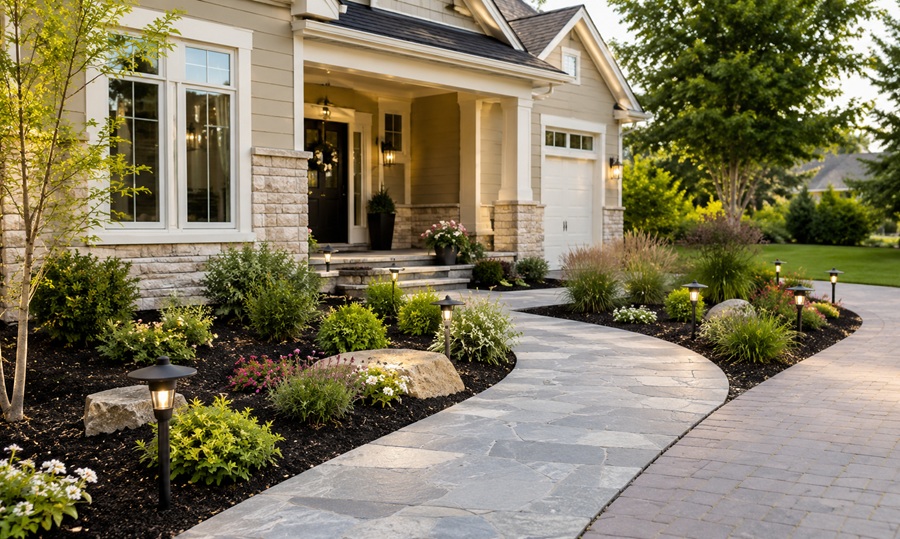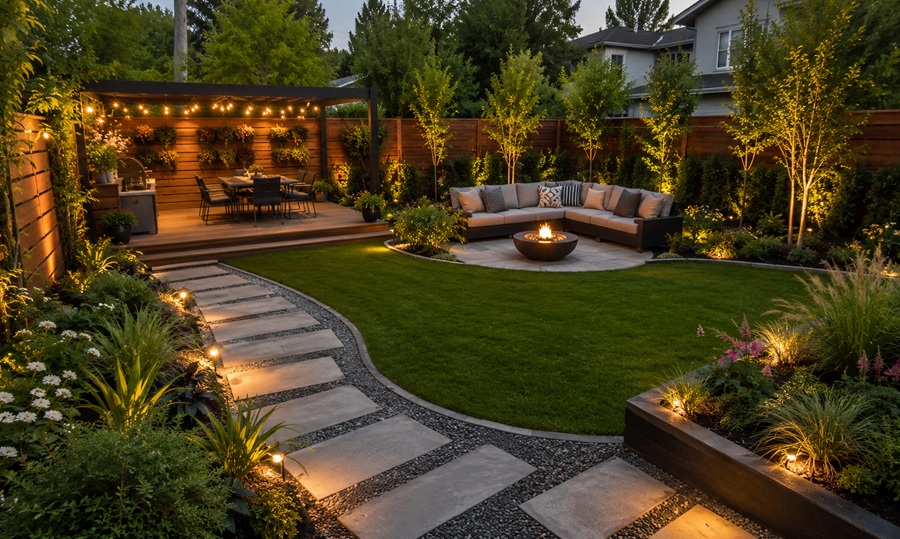
“What should I do with my backyard?” is really two questions in disguise — what do you want it to look like, and how do you actually want to use it. Style should follow function, not the other way around. Here’s how a few common backyard styles break down.
Modern & Minimalist
Clean lines, restrained plant palettes, and hardscape that does a lot of the visual work.
- Concrete or large-format paver patios
- Ornamental grasses in structured rows rather than wild clusters
- A single specimen tree instead of dense plantings
- Geometric raised beds or planters
- Limited color palette — greens, grays, one accent color
Cottage & Romantic
Layered, informal plantings that look like they’ve grown in over years rather than been installed all at once.
- Mixed perennial borders with overlapping bloom times
- Climbing roses or clematis on an arbor or fence
- Winding gravel paths instead of straight lines
- A mix of heights — tall back plants, shorter front plants
- Weathered or reclaimed materials for structures
Low-Maintenance & Drought-Tolerant
Built for people who want to enjoy the yard without spending every weekend maintaining it.
- Native perennials and grasses suited to local rainfall
- Mulched beds instead of large lawn areas
- Drip irrigation instead of overhead sprinklers
- Gravel or hardscape zones replacing high-maintenance turf
Entertaining-Focused
Designed around hosting — the plants support the space rather than dominate it.
- A defined patio or deck sized for seating and a dining table
- An outdoor kitchen or grill station
- Fire pit or fireplace as a gathering point
- Perimeter lighting for evening use
- Privacy screening via shrubs, fencing, or pergola with climbing vines
Maintenance Schedule at a Glance
| Task | Frequency |
| Mulch top-off | 1–2x per year |
| Perennial deadheading | Weekly during bloom season |
| Lawn mowing | Weekly (growing season) |
| Shrub pruning | 1–2x per year |
| Irrigation check | Seasonally |
Matching Plants to Style, Not Just Looks
It’s tempting to pick plants purely because they look good in a photo, but the healthiest, longest-lasting yards choose plants that suit both the style and the site conditions simultaneously. A cottage garden depends on plants that actually rebloom and spread — packing in showy but short-lived annuals will leave gaps by midsummer. A modern minimalist yard depends on plants that hold a clean form without constant pruning, since the whole aesthetic collapses if the ornamental grasses flop over or the specimen tree needs shaping every few weeks. Site conditions — sun exposure, soil drainage, local rainfall — should narrow the plant list before style preferences do; a beautiful plant that struggles in your specific yard undermines the style faster than picking a slightly less photogenic option that actually thrives.
A Quick Conversation With Yourself Before You Start
Do you host often? Prioritize hardscape and seating capacity. Do you want low weekend upkeep? Prioritize native plants and reduced lawn area. Do you garden as a hobby? Prioritize planting beds over hardscape. Do you have kids or pets? Prioritize durable turf areas and non-toxic plant choices.
FAQ
Q: Can I combine styles, like modern and cottage?
A: Yes — many successful backyards blend a clean hardscape layout with looser, layered planting for softness.
Q: What’s the most budget-friendly style to start with?
A: Low-maintenance/drought-tolerant designs tend to have the lowest ongoing costs, since they require less water, less replanting, and less lawn care.
Q: How much of the yard should be lawn versus planting beds?
A: There’s no fixed rule, but many designers suggest limiting lawn to areas that get regular foot traffic or play use, converting the rest to beds or hardscape.
Q: Do entertaining-focused yards need less greenery?
A: Not necessarily less, but the planting is usually arranged around the hardscape rather than the other way around.
Q: How long does it take for a cottage-style garden to look “established”?
A: Typically a few growing seasons, since the layered, overgrown look depends on plants maturing and filling in naturally.
There’s no universally “best” backyard style — only the one that matches how you’ll actually use the space. Start there, and the plant choices and layout tend to follow naturally.