Quick Answer
Victorian style homes are residential properties built roughly between 1837 and 1901, marked by steep rooflines, decorative trim, asymmetrical facades, and tall narrow windows. The term covers several subtypes, including Queen Anne, Folk Victorian, and Second Empire, each with distinct details. Understanding these differences is the first step to identifying, buying, or restoring one confidently.
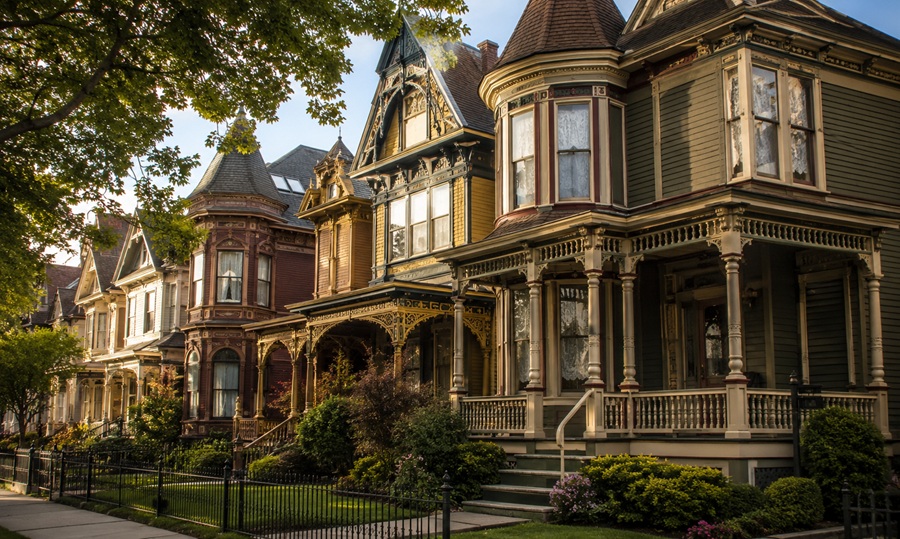
If you’ve ever driven through an older neighborhood and stopped to admire a house with a wraparound porch, a turret, and paint colors that seem to argue playfully with each other, you were probably looking at one of many Victorian style homes. The label gets used loosely, and that’s exactly why so many first-time buyers and history enthusiasts end up confused about what actually qualifies.
Victorian style homes aren’t a single design; they’re an umbrella term covering several architectural movements that overlapped during Queen Victoria’s reign. Learning to tell them apart matters if you’re house hunting, planning a renovation, or simply trying to talk shop with a contractor without getting talked over. This guide walks through the identifying features step by step, so you finish with a working eye for spotting one on any street.
Step 1: Understand What ‘Victorian’ Actually Means
Before you can identify a Victorian style home, it helps to know that the term is a period label, not a single design school. It refers to homes built during the reign of Queen Victoria, roughly 1837 to 1901, a stretch long enough to cover several distinct architectural trends. Early Victorian homes lean simpler and more symmetrical, while later ones, built after industrial milling made ornate trim affordable, tend toward the elaborate, asymmetrical look most people picture today.
This matters practically because a 1905 house built in a Victorian-influenced style is sometimes called Victorian by real estate listings even though the queen had already died. Appraisers and preservation societies are stricter about dates than agents are, so don’t be surprised if the paperwork and the popular label don’t match exactly.
Step 2: Learn the Major Subtypes
The timeframe only tells part of the story, though. ‘Victorian’ actually branches into several recognizable subtypes, and each one has its own personality.
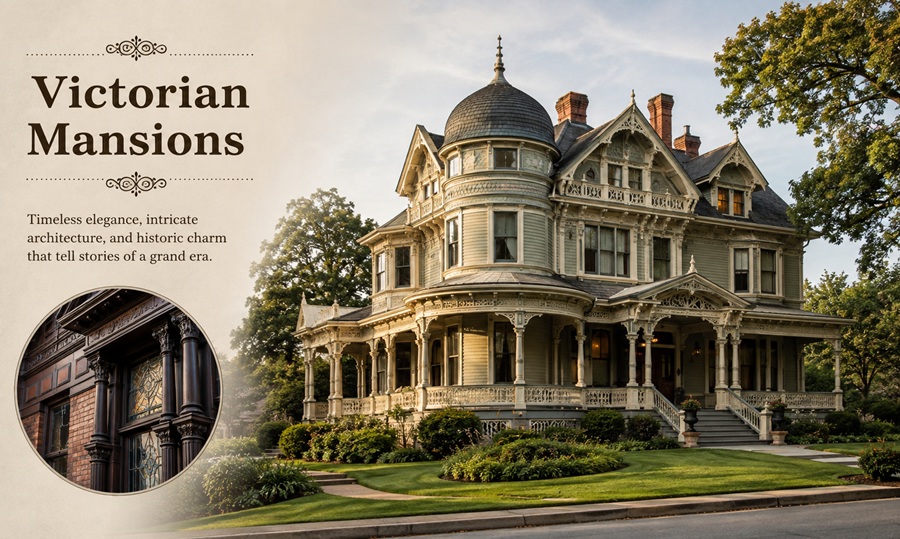
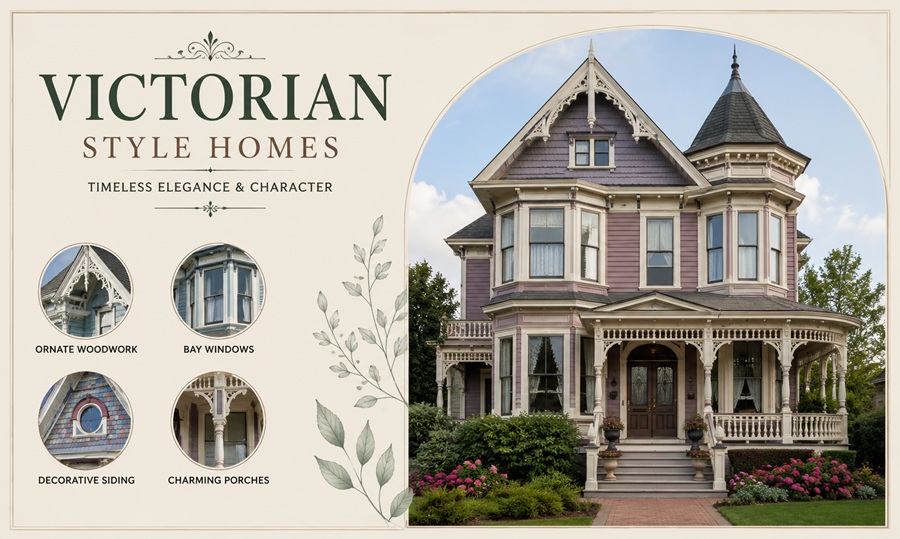
- Queen Anne: The most recognizable subtype, with turrets, wraparound porches, decorative spindle work, and multiple roof pitches. Often called a ‘painted lady’ when finished in three or more contrasting colors.
- Folk Victorian: A simpler farmhouse-style base dressed up with machine-cut trim and spindle porch details, without the turrets or complex massing of Queen Anne homes.
- Second Empire: Identified by a distinctive mansard roof with dormer windows, popular in the 1860s and 70s and common in the Northeast and Midwest.
- Gothic Revival: Features steep pointed gables, decorative vergeboard (sometimes called gingerbread trim), and pointed-arch windows.
- Italianate: Lower-pitched roofs, tall narrow windows, and bracketed cornices, borrowing from Italian farmhouse and villa design.
Step 3: Spot the Exterior Clues
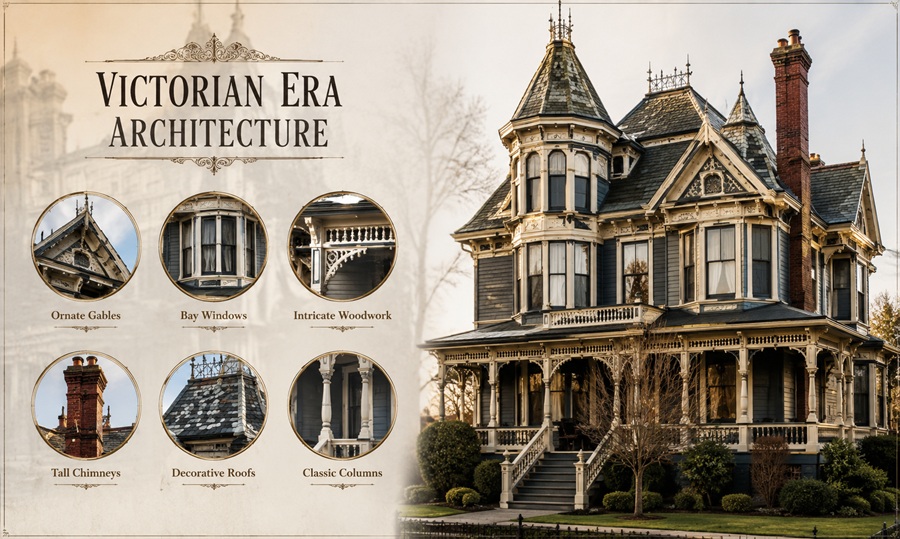
With the subtypes in mind, train your eye on a handful of exterior clues that show up across most Victorian style homes regardless of subtype. Steeply pitched, irregular rooflines are the most reliable signal, since builders of the era rejected the boxy symmetry of earlier Georgian and Federal styles in favor of visual movement.
Look next at the windows. Tall, narrow, and often paired or grouped in twos and threes, Victorian windows frequently include decorative crowns or hoods above them. Porches are another giveaway; a full-width or wraparound porch with turned spindles, brackets, or a balustrade almost always points to a Victorian-era build. Finally, check the color scheme. Original Victorian paint jobs used two to five colors to highlight architectural details, a tradition many restored homes still follow today.
Step 4: Know What to Check Before You Buy or Renovate
Identifying the style is the easy part. The harder question is what ownership actually involves. These homes were built before modern electrical, plumbing, and insulation standards, so budget for updates even if the house looks move-in ready. Knob-and-tube wiring, galvanized plumbing, and minimal wall insulation are common finds behind the plaster.
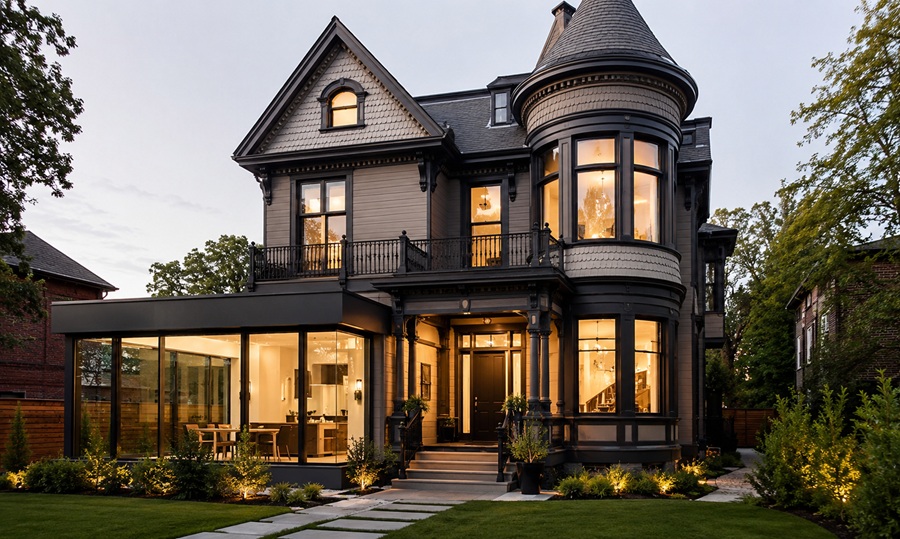
It’s also worth checking whether the property sits in a designated historic district. That status can restrict exterior changes, from window replacement to paint color, and may require approval from a local preservation board before you touch the facade. On the upside, historic designation sometimes unlocks tax credits or grant programs for restoration work, so it’s worth researching both the rules and the incentives in your area before committing.
Regional Considerations for Victorian Style Homes
Where a Victorian style home sits changes what problems and priorities matter most. In colder northern climates, older single-pane windows and thin wall cavities drive up heating costs significantly, making insulation upgrades a near-universal first project. Humid coastal regions bring different concerns, particularly wood rot in porch columns and trim, along with a higher risk of pest damage in older sill plates.
Buyers in dry, sun-heavy climates often deal with faded or cracked original paint and trim that has shrunk away from window frames over the decades. Local buying behavior reflects this too: in cities with strong historic preservation cultures, Victorian homes often carry a price premium and attract buyers specifically seeking original detail, while in areas with less preservation infrastructure, similar homes may sell closer to standard market value despite comparable character.
Frequently Asked Questions
What years count as Victorian style homes?
Victorian style homes are generally those built between 1837 and 1901, spanning Queen Victoria’s reign. Some listings stretch this to the early 1900s when a home’s design clearly follows Victorian-era conventions, even though it was technically built after the period ended.
What is the most common Victorian subtype?
Queen Anne is the most recognizable and commonly referenced Victorian subtype, known for turrets, asymmetrical facades, and wraparound porches. It’s the style most people picture when they hear the word ‘Victorian,’ though Folk Victorian homes were actually built in far greater numbers nationwide.
Are Victorian style homes expensive to maintain?
Maintenance costs run higher than for newer homes because of outdated wiring, plumbing, and insulation, plus the need for specialized trim and window repair. Costs vary widely by condition, but budgeting extra for ongoing upkeep is standard advice from restoration professionals.
Can you add modern amenities to a Victorian home without ruining its character?
Yes, most updates like central air, updated kitchens, and rewired electrical can be done without altering visible character, especially when mechanical systems are routed through non-original spaces like basements or closets. Exterior changes require more care, particularly in historic districts.
How do I know if my house is Queen Anne or Folk Victorian?
Queen Anne homes typically include a turret, varied roof pitches, and more elaborate ornamentation, while Folk Victorian homes have a simpler rectangular or L-shaped footprint dressed up with machine-cut trim. If the floor plan is boxy and symmetrical but the porch is decorative, it’s likely Folk Victorian.
Conclusion
Spend an afternoon walking a historic block after reading this, and you’ll notice the difference immediately: a turret here, a mansard roof there, spindle work that used to just register as ‘old and pretty.’ That’s the real payoff of learning these basics. Victorian style homes stop being one big blur and start being a set of choices someone made on purpose, generations ago.