Asbestos abatement describes work intended to control the risk from asbestos-containing materials. Depending on the material and project, that work may involve removal or a method of managing material in place. Encapsulation is one such management approach, but it is not suitable for every situation.
How asbestos abatement removes or manages asbestos-containing materials
The term asbestos abatement can cover different ways of addressing asbestos-containing materials. Removal takes the material out of the building, while other approaches aim to keep fibers from being released without removing the material. A professional assessment helps determine which scope is appropriate for the material and its surroundings.
How encapsulation seals material in place
Encapsulation applies a sealant or coating to an asbestos-containing material to help bind fibers or keep them from becoming airborne. It leaves the material in the home, so the approach depends on its condition, accessibility, and compatibility with the coating. The treated area still needs to be identified and handled carefully in future work.
How enclosure differs from encapsulation
Enclosure places a durable barrier around asbestos-containing material rather than coating the material itself. It may be considered where the material can remain in place but needs to be separated from occupants or routine activity. Like encapsulation, enclosure does not remove the asbestos, and the barrier must remain intact to serve its purpose.
Why neither option should be a DIY project
Disturbing suspected asbestos-containing material can release fibers that are difficult to see and can spread beyond the immediate work area. Homeowners should not scrape, sand, drill, or remove material they suspect may contain asbestos. Leave the assessment to qualified professionals, who can determine how to limit exposure and manage the work safely.
When asbestos-containing materials may need attention
Asbestos can be present in older building materials, but age or appearance alone cannot confirm its presence. The question is whether the material is damaged, likely to be disturbed, or otherwise needs attention. A measured response starts with identifying the material and its condition rather than assuming that every suspected material must be removed.
Common materials and locations in older homes
Asbestos-containing materials may be found in some older homes in products such as pipe or boiler insulation, floor tiles, roofing materials, and textured finishes. They can also occur in other building products, and similar-looking materials may not contain asbestos. The places asbestos may be found can help frame the question, but a visual inspection cannot establish what a particular material contains.
Why intact, undisturbed materials may pose less risk
Material that is in good condition and left undisturbed is generally less likely to release fibers than material that is crumbling or being cut. That does not mean it should be ignored: location, wear, and the chance of accidental damage all matter. Avoiding unnecessary disturbance can be a sensible first step while an owner decides whether professional advice is needed.
Signs of damage that warrant a professional assessment
Fraying, crumbling, water damage, or material that has been broken or scraped can justify seeking a professional assessment. Damage does not by itself prove that asbestos is present, but it may increase the chance that fibers could be released if asbestos is present. Keep people away from the affected area and avoid sweeping or handling debris until a professional advises what to do.
Why testing is needed before disturbing suspected materials
A material’s appearance is not a reliable way to determine whether it contains asbestos. Where renovation, repair, or demolition could disturb a suspect material, sampling and analysis by qualified professionals can establish whether asbestos is present. Testing before work begins can help the owner and contractor choose a suitable plan instead of making assumptions once the material has been disturbed.
How abatement and encapsulation compare
Removal and encapsulation address asbestos-containing material in different ways, so neither is automatically the better choice. Removal takes the material out but requires careful work to control the possibility of fiber release during handling. Encapsulation avoids removing the material, yet leaves it in place with continuing responsibilities for protecting and monitoring it.
Differences in immediate exposure risk
Both approaches require precautions because work on asbestos-containing material can create exposure if fibers are released. Removal involves taking material out, while encapsulation involves applying a coating to material that remains. The condition of the material and the work methods matter; the name of the chosen approach alone cannot guarantee that exposure will be prevented.
How each option affects future renovations and repairs
Once material has been removed, it no longer needs to be managed at that location, though project records remain important. Encapsulated or enclosed material stays part of the building and must be disclosed to people who may later work nearby. Before future renovations, owners should share relevant records with contractors so that planned work does not accidentally disturb it.
Potential disruption to your home and daily routine
Either option can affect access to rooms and daily routines while work is underway. The scale of disruption depends on where the material is, the area involved, and the containment and work plan. Owners should ask the contractor to explain which areas may be restricted and how the schedule will be communicated.
Long-term monitoring and maintenance needs
Removed material does not require ongoing monitoring at its former location, but the owner should keep documentation of the work. Encapsulation or enclosure calls for attention over time because damage to the coating or barrier can undermine the management approach. Owners should know where the material remains, what signs of damage to watch for, and whom to contact if its condition changes.
Factors that can guide your decision
A sound decision depends on more than the initial price or the preference to avoid disruption. The material’s condition, its location, and the home’s likely use all affect which options a professional may consider. Owners can make the conversation more useful by describing both current concerns and plans for the property.
Material type, location, and condition
The type of material and the way it is installed help shape whether removal, encapsulation, or enclosure may be appropriate. Its condition also matters: a stable material in a low-traffic area presents a different management question from damaged material in a frequently used space. An assessment should consider the surrounding area as well as the material itself.
Whether the material is likely to be disturbed
Material that is unlikely to be touched may be managed differently from material in the path of routine repairs or daily activity. A nearby plumbing repair, for example, could make insulation around pipes relevant even if it currently appears undamaged. Owners should share planned maintenance and any recurring access needs with the professional assessing the site.
Renovation plans and future access needs
An upcoming remodel can change the decision because construction may require access to surfaces or systems that contain asbestos. If a planned project would disturb the material, the owner should arrange assessment before work begins and coordinate the schedule with the renovation team. A renovation notification resource may also help owners identify questions to ask local authorities about requirements in their area.
Household needs, budget, and project timeline
Household routines, access needs, and the time available for work can all influence the practical choice. Budget is part of that discussion, but a lower initial estimate may not reflect future inspection, maintenance, or renovation constraints. Comparing those tradeoffs with a professional can help an owner choose an option that fits both the home and the household’s plans.
What to expect from a professional asbestos project
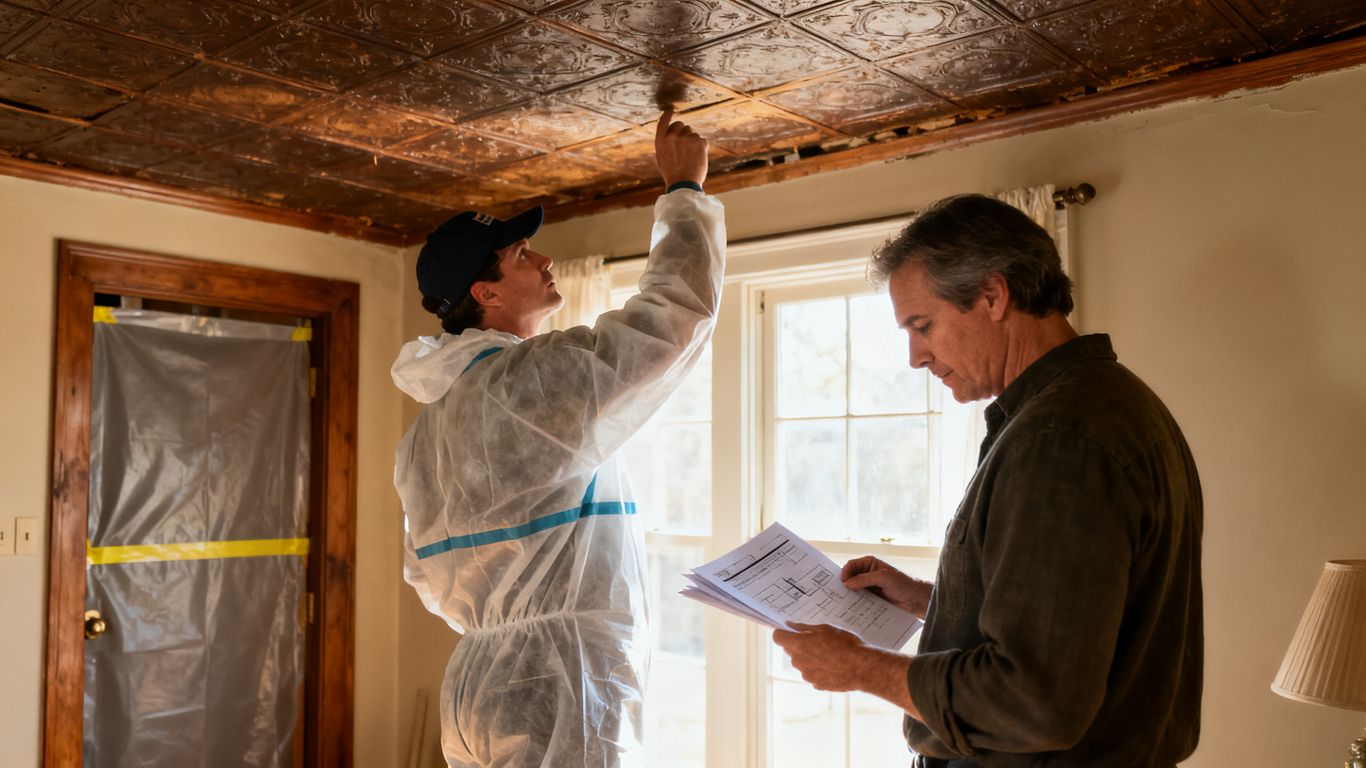
A professional project usually begins with an assessment, not with immediate removal. The scope should explain what material is involved, which approach is proposed, and what steps will limit disturbance and access during the work. Owners can ask questions throughout the process and should receive documentation describing the work performed.
Finding a qualified asbestos professional
Owners should check the qualifications and experience required for asbestos work in their jurisdiction, and ask what training and insurance the contractor carries. Written estimates make it easier to compare project scope rather than price alone. When reviewing contractor vetting steps, owners can use the same practical questions to clarify credentials, work plans, and documentation.
Inspection, sampling, and project planning
An inspection considers the suspected material, its condition, its location, and the work that may disturb it. If sampling is warranted, it should be handled by qualified professionals using appropriate procedures. The resulting project plan should specify the proposed method, the affected area, protective measures, expected timeline, and arrangements for occupants.
Containment, protective equipment, and work practices
Before work begins, the contractor should explain how the work area will be controlled and who may enter it. Appropriate protective equipment and work practices are selected for the project and its materials. Owners should follow access instructions and avoid entering a restricted area, even if the work appears quiet or nearly finished.
Cleanup, clearance testing, and documentation
At the end of the project, the contractor should explain how the work area will be cleaned and what steps will confirm that the agreed scope is complete. Depending on the project and applicable requirements, clearance testing may be part of the closeout. Owners should request copies of test results when performed, disposal records where applicable, and a written account of the work and any material left in place.
Costs, rules, and ongoing responsibilities
There is no single price or rule that applies to every asbestos project. Costs and requirements can depend on the material, project scope, location, and type of work being planned. Owners should confirm local requirements before work starts and keep a clear record of decisions and completed work.
What can affect project costs
The amount and type of material, its location, the ease of access, and the work method can all influence an estimate. Containment needs, testing, cleanup, and disposal arrangements may also affect the project total. Because these details vary, a site-specific estimate is more useful than a general price range.
How local and state requirements may apply
Rules for notification, licensing, work practices, and disposal can vary by location and project. Renovation or demolition may trigger requirements even when the work is at a private residence, so owners should check with the relevant state or local agency before scheduling. The New Mexico asbestos requirements provide a starting point for understanding state rules; local agencies can clarify how requirements apply to a specific project.
Questions to ask when comparing contractor estimates
A useful estimate should make clear what the contractor has inspected and what work the price includes. Owners can ask whether sampling is needed, which materials will be addressed, how the space will be managed during work, and what documentation will be provided. They should also ask about the schedule, possible disruptions, and any work or follow-up that is excluded from the estimate.
Records and follow-up to keep after the work
Owners should retain inspection and laboratory records, the work plan, invoices, and closeout documentation together with home records. If asbestos-containing material remains encapsulated or enclosed, the records should identify its location and note any monitoring or maintenance guidance. Sharing that information with future contractors can help prevent accidental disturbance and support informed decisions about later repairs.